- Products
- Industries Served
- Services
- Resources
- About Us
- Blog
- Contact Us
- Products
- Industries Served
- Services
- Resources
- About Us
- Blog
- Contact Us
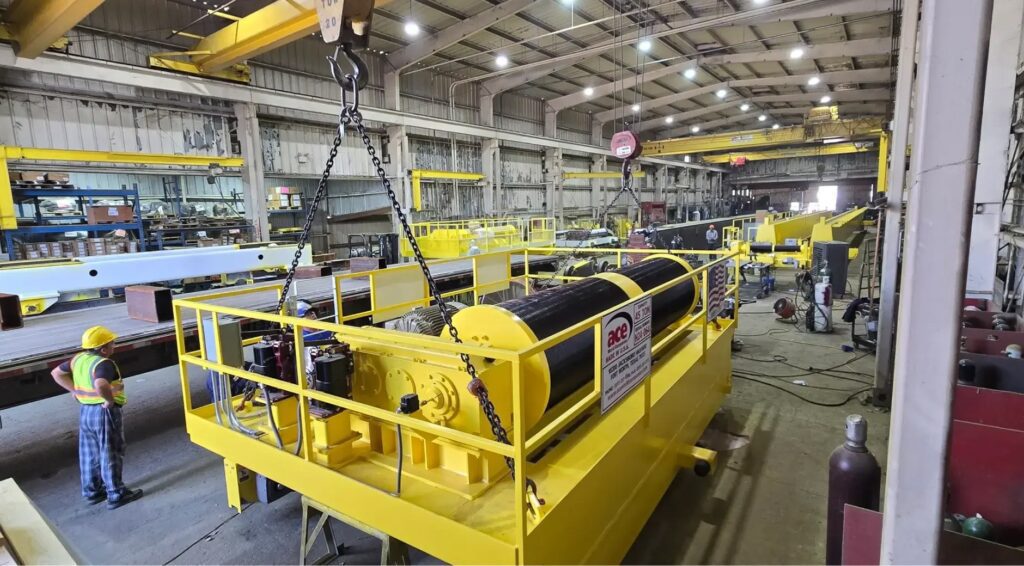
When a hoist stops lifting, the crane above it goes idle and so does every job waiting on that load. The fastest way back to a safe, productive lift is sourcing the right hoist parts from a manufacturer that builds the components in-house, machines them to OEM tolerances, and understands how each piece works inside the larger lifting system. Ace World Companies manufactures and supplies hoist parts for their electric wire rope hoists, Ace built-up hoists, and Advantage packaged hoists across overhead bridge cranes, gantry cranes, and specialty material handling systems, engineered to the same standards as our original equipment.
ACE has spent more than three decades designing, building, and modernizing hoists for steel mills, aerospace plants, shipyards, power generation facilities, and heavy manufacturing operations. That experience shapes every hoist parts request we handle, whether you need a single brake disc to bring a line back up tonight or a full set of drive components for a hoist modernization. Because we manufacture over 90% of our components at our U.S. facilities, we control both the quality going onto your hoist and the lead time getting it there.
A hoist is a system of precision parts working under constant load, and any one of them can take the unit out of service. ACE supplies the full range of crane hoist components for our own hoists and for units built by other major manufacturers:
For our electric hoist parts specifically, our engineers can match nameplate data, reverse-engineer an obsolete component, or build a direct replacement that drops into your existing hoist without modification.
Most hoist failures announce themselves before they stop a line. Brake slippage, jerky lifts, abnormal grinding or knocking, reduced lifting speed, and load drifts all point to worn internal components. A failed periodic inspection, increased downtime, or trouble holding a load at height are clear signals that hoist replacement parts are due. Addressing wear early protects the operator, the load, and the surrounding equipment, and it is almost always faster and less costly than rebuilding a hoist that has been run to failure.
Sometimes the right answer is not a like-for-like swap but an upgrade. Replacing outdated controls, adding overload monitoring, and upgrading braking and cooling systems can extend a hoist’s service life by years while improving safety and precision. Our crane modernization services team retrofits aging hoists with modern variable-frequency drives, improved acceleration and deceleration, and enhanced load handling, often at far less than the cost and downtime of a full replacement. Upgrades are available for capacities ranging from 5 to 500 tons.
ACE is more than a parts shelf. Our in-house engineering team helps customers identify the correct industrial hoist parts when nameplates are missing or part numbers are long discontinued. On our products, we provide part identification assistance, custom replacement solutions, replacement for obsolete components, and technical support throughout the repair process.
Because every part is designed, machined, and assembled under one roof, ACE controls craftsmanship and minimizes lead times on our components.
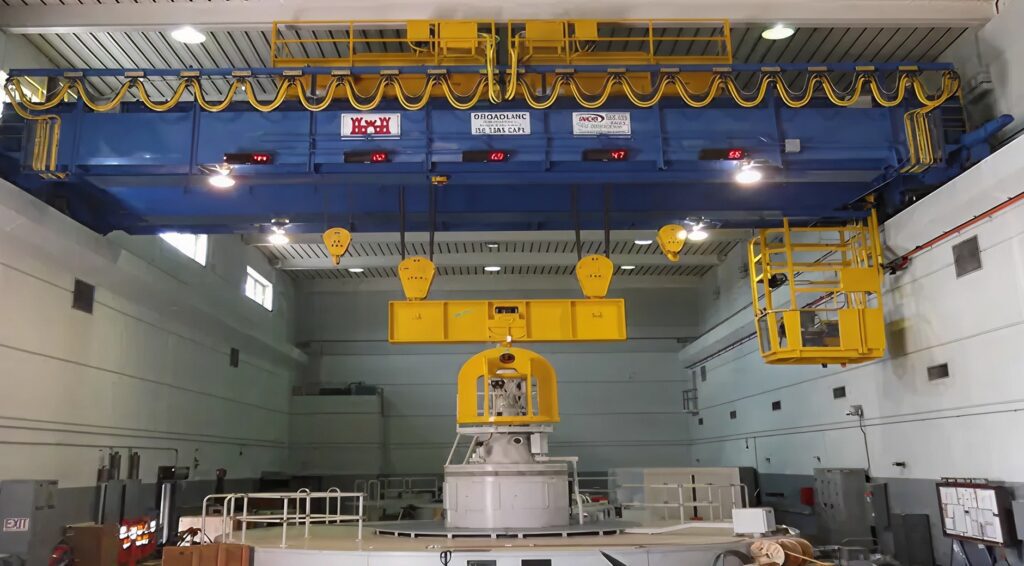
ACE supplies overhead crane hoist parts to manufacturing, steel processing, automotive, aerospace, utilities and power generation, warehousing, and heavy industrial facilities nationwide. Wherever a hoist is critical to production, we help keep it running safely and reliably.
Tell us your hoist make, capacity, and the component you need, and our engineers will help you source the correct part fast. Submit a parts request to get started, or contact our team at 800-431-4223 to speak with an engineer about repairs, replacements, or a hoist modernization project.
Brakes, wire rope, motors, wheels, and bearings wear fastest because they carry the load and absorb the duty cycle. Brake and wire rope components are the most frequently replaced.
Hoists should receive frequent and periodic inspections per OSHA and CMAA guidelines, with the interval based on duty cycle and environment. High-duty operations warrant more frequent checks.
Yes. Most issues can be resolved by replacing the worn component, such as a brake, a wheel, or motor, rather than the complete unit, which saves both cost and downtime.
OEM parts meet the original manufacturer’s specifications. ACE manufactures their components to meet or exceed OEM tolerances and can reverse-engineer obsolete parts when factory replacements are no longer available.
When repair costs approach the value of the hoist, or the unit is obsolete and hard to source parts for, modernization or replacement is usually the better long-term investment.