- Products
- Industries Served
- Services
- Resources
- About Us
- Blog
- Contact Us
- Products
- Industries Served
- Services
- Resources
- About Us
- Blog
- Contact Us
The point where the load meets the hook determines how safely and efficiently an overhead lift operates. Undersized or poorly matched equipment forces operators to fight the load, wastes cycle time, and puts people near a suspended weight for longer than necessary.
Ace World Companies designs and manufactures load blocks, lifting beams, and spreader beams that give operators control of the load from pick to set.
Since 1987, our Fort Worth engineers have created crane lifting equipment for steel mills, shipyards, aerospace plants, and other heavy industries. That experience shows in every below-the-hook lifting device we produce, from standard replacement blocks to fully custom lifting attachments.
Request a Quote [Call 866-805-6734]
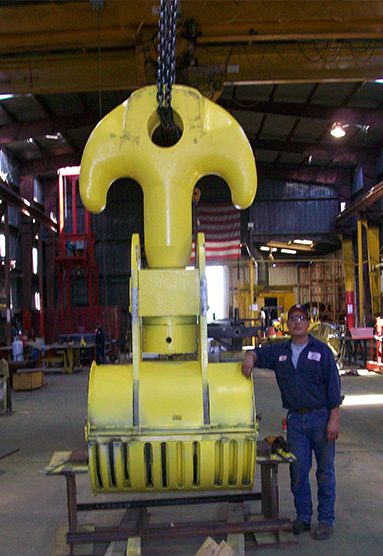
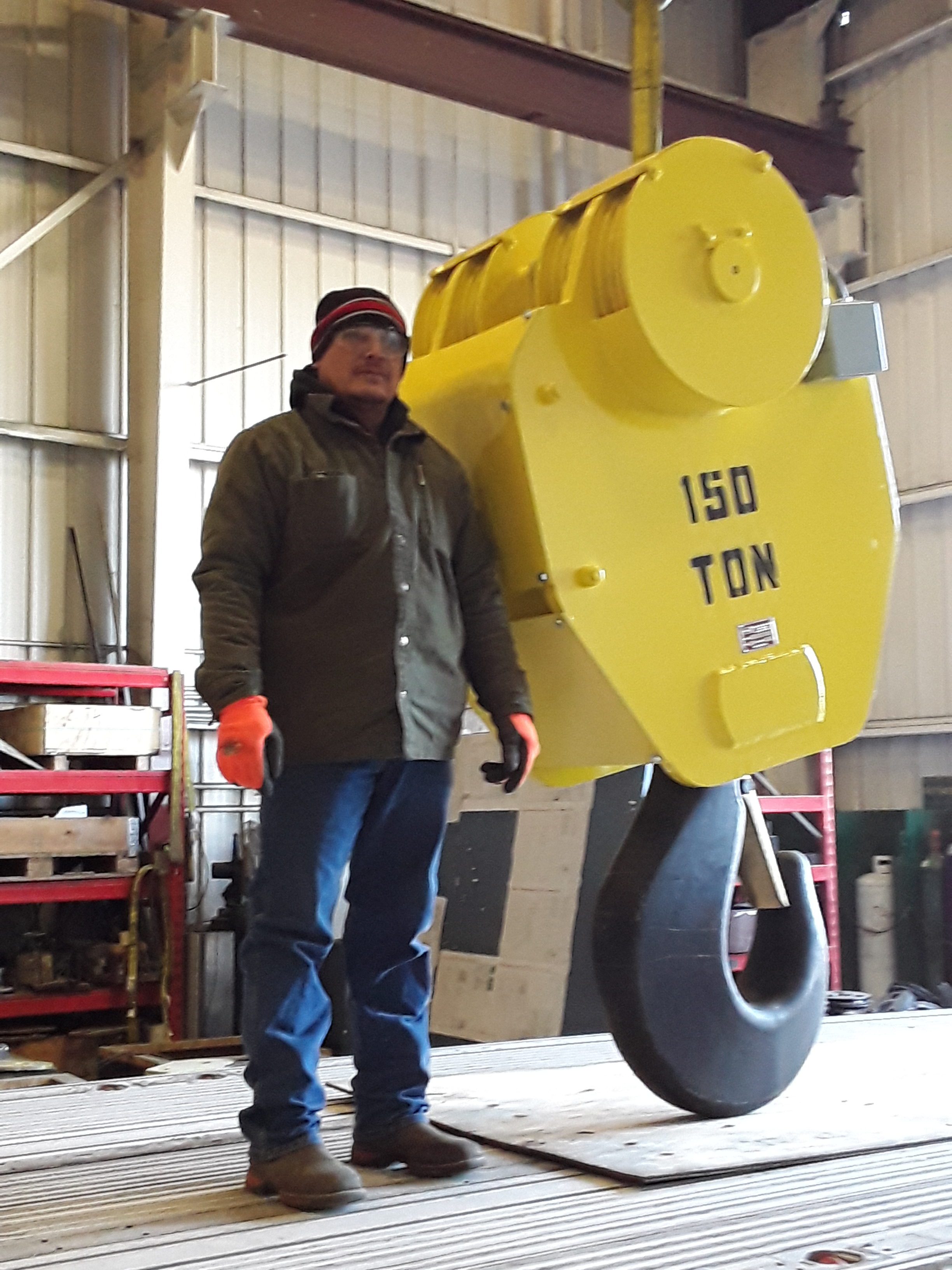
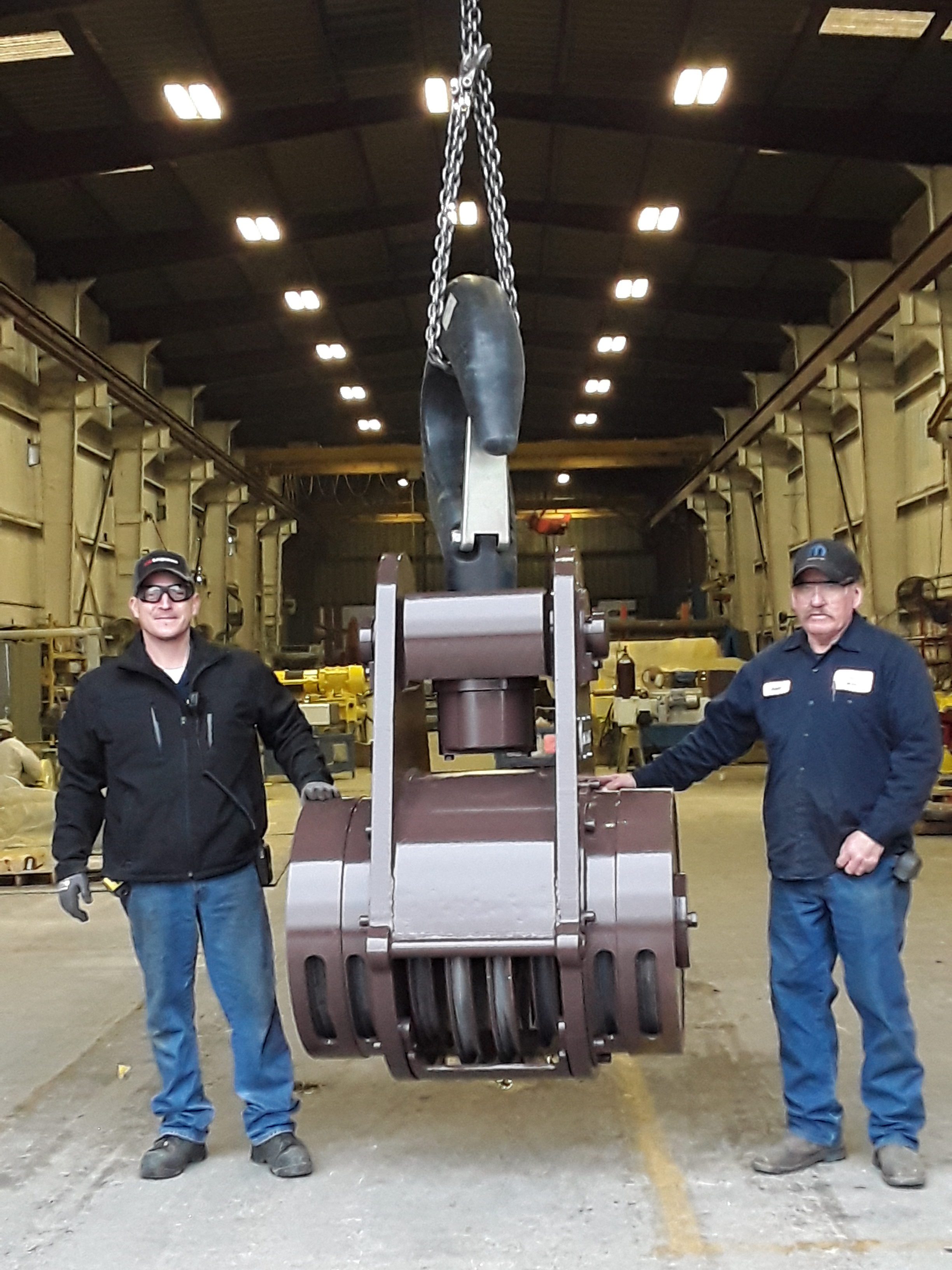
A load block carries the sheaves, hook, and bearings that route wire rope and support the rated load. As capacity climbs, block design becomes central to both safety and productivity. Ace manufactures load blocks across a wide capacity range, including motorized bottom blocks proven at 150 and 220 tons.
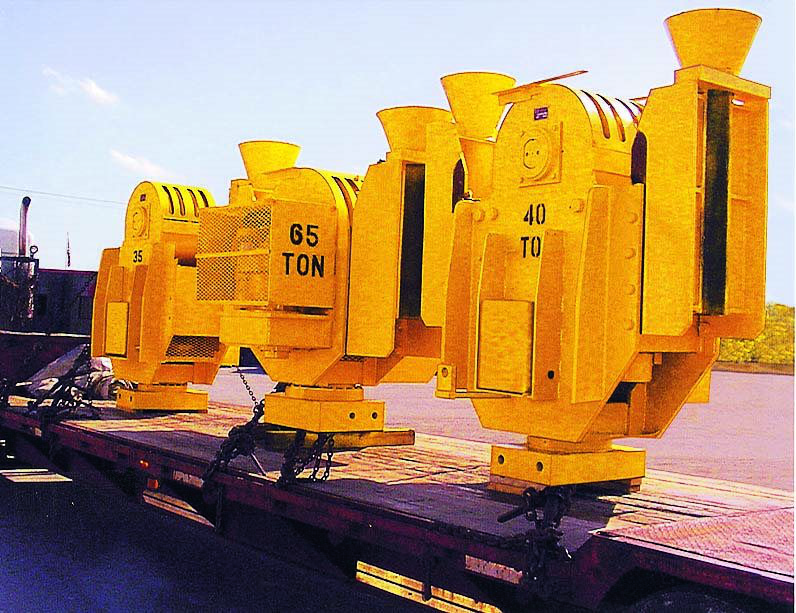
Our power rotating load block is a strong alternative to a standard block when a job calls for balanced, controlled positioning. Powered rotation lets operators turn and realign a load under full control, without relying on tag lines or manual repositioning. For steel service centers, fabrication shops, and foundries that reorient heavy loads all day, this shortens cycle times and keeps hands away from the load.
Every block is matched to your hoist reeving, rope diameter, and duty cycle, so the finished assembly fits the crane it will serve.
Lifting beams and spreader beams both spread a load across more than one pick point, and choosing between them depends on the load and the hook height available.
A lifting beam uses a single top attachment and carries the load in bending, which keeps overall height low when clearance is tight. Spreader beams place the structure in compression and use slings angled from each end, which handle very heavy or wide loads efficiently while protecting the load from inward sling force. Ace engineers both types to ASME BTH-1, then proof tests and marks each unit before it ships.
Custom lifting beams solve the problems standard equipment cannot. When a load has offset weight, awkward geometry, multiple attachment points, or a delicate surface, our team designs a lifting attachment around those exact conditions. Adjustable pick points, spreader frames, and lifting fixtures for a single product line are all within our shop’s capabilities.
Well-designed material handling lifting solutions reduce risk before an operator ever touches the pendant. Ace applies several practices to every project:
These steps support compliance with ASME B30.20 and give your safety team the paperwork they need during audits and periodic inspections.
Design, fabrication, and testing happen inside our ISO 9001:2015 certified facility, so you work directly with the engineers responsible for your equipment. That structure keeps custom lifting devices moving from concept to finished product without handoffs to outside shops. Ace has engineered lifting solutions for demanding customers across aerospace, steel, energy, and heavy manufacturing, and the same team stands behind standard load blocks and overhead crane lifting devices alike.
When a project needs more than lifting equipment, we also support crane modernization, replacement parts, and repairs, which means one partner can cover the crane and everything hanging below its hook.
It comes down to hook height and load width. A lifting beam keeps height low and works well in tight overhead spaces, while a spreader beam handles wider or heavier loads with angled slings. Send us your load details and available clearance, and we will point you to the right option.
Yes. We size blocks to your reeving, rope diameter, and rated capacity so the assembly integrates with the hoist and crane already in service.
It begins with your load details and application requirements, followed by engineering design, your review and approval of the drawings, and fabrication. Because every step is handled in-house, our team can give you a realistic timeline up front and keep you updated as the build progresses.
Tell us the load weight, dimensions, attachment points, and the crane the device will run on, and our engineers will recommend a load block, lifting beam, or custom solution suited to the work.